Cold room not cooling: professional diagnosis for restaurants, hotels, supermarkets and industry
Your cold room is drifting and stock is at risk? A diagnostic guide to understand the likely cause, save the stock in the first few minutes and know when it's a real emergency.
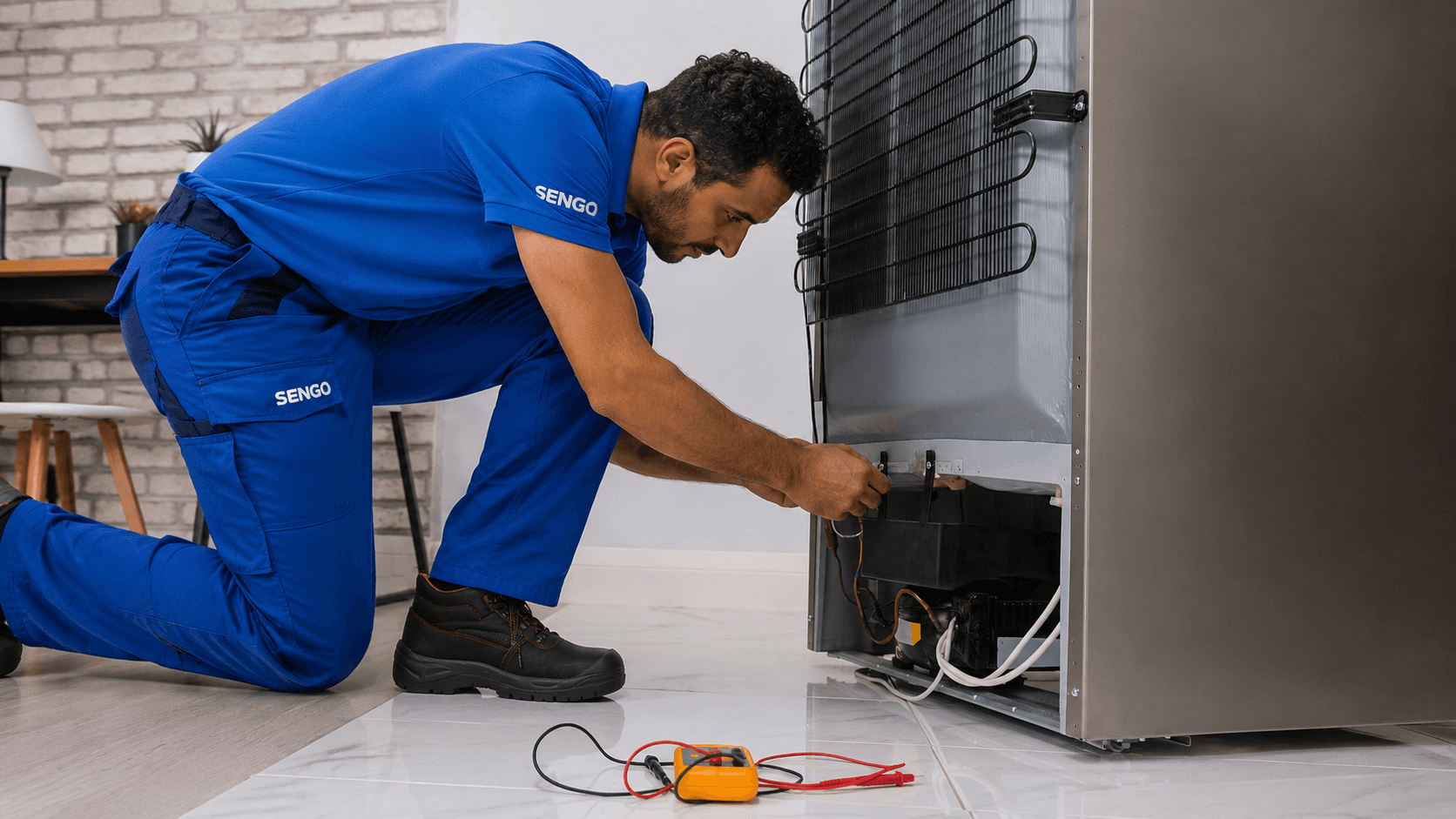
A cold room that no longer reaches its set-point isn't a minor fault — it's an incident that threatens stock worth up to a week of turnover, potential food-safety non-compliance and sometimes a full activity stop. This guide covers: what to do in the first few minutes, the six most common causes, the difference between a true emergency and a case that can wait, and the information to prepare before calling a technician.
The first minutes: save the stock before you diagnose
Before you reason about the cause, your first goal is to limit the loss. Four actions in a few minutes:
- **Don't open the door more than needed.** Every opening lets heat in and pushes temperature up.
- **Photograph the control panel** if an error code or alarm is showing, and note the time.
- **Move the most sensitive stock** (raw meat, fish, dairy, medication) into another running cold room or freezer, or into insulated bins with dry ice if available.
- **Contact a refrigeration technician immediately on WhatsApp** — send the panel photos, a description of the symptoms and the current temperature.
These actions in the first 10 minutes save you two hours of damage later.
The six most common causes
Most refrigeration faults we handle in Morocco trace back to one (or a mix) of these causes.
1. Fouled or blocked condenser
Cause number one worldwide. The condenser — the metal grille usually on the outdoor unit or above the room — dissipates heat captured by the refrigerant. If it gets coated with dust, grease (common in restaurant kitchens) or leaves, it can no longer cool efficiently. Result: the compressor runs non-stop but the interior temperature climbs gradually.
How to recognise it: visual inspection — if you see a grey or black layer, that's it. An unexplained rise in the monthly electricity bill is an additional hint.
Fix: cleaning the condenser with water and specialist degreaser, then checking the pump and the compressor. 1-2 hours in most cases.
2. Refrigerant leak
The refrigerant (R404A, R448A, R449A, R290 or CO₂) circulates in the loop under pressure. Over time, joints, valves or the evaporator can begin to leak. A small leak means the room cools less and less over several weeks; a big leak means a total stop.
How to recognise it: compressor running non-stop, room not reaching set-point, sometimes localised frost forming on a specific pipe. Light smell in some cases depending on the refrigerant.
Fix: electronic leak detection, refrigerant recovery, repair of the leak point (brazing or part replacement), vacuum pull-down, then charge with the exact correct amount. 2-4 hours for simple cases.
3. Compressor failure
The compressor is the "heart" of the circuit. If it stops for good, there's no cooling at all. Symptoms: total silence from the outdoor unit, or heavy knocking noise, or the compressor cutting out a few seconds after start-up.
Causes: compressor age (10-15 years usually), loss of lubricating oil, sustained high pressure caused by a fouled condenser, an electrical fault (start capacitor, relay).
Fix: sometimes replacing the electrical capacitor is enough (cheap part, minutes). In serious cases, the compressor has to be fully replaced — expensive part, a day of work. On old installations, full unit replacement is sometimes cheaper.
4. Defrost-system fault
In a positive (2-8°C) or negative (-18°C) cold room, the evaporator naturally builds up frost. The programmed defrost system melts it periodically. If it fails, frost accumulates, covers the evaporator and prevents cooling. Result: a huge ice block inside the room and a rising temperature despite the compressor running.
How to recognise it: visually — if you see an abnormal amount of frost on the evaporator or inside the room, that's it.
Fix: manual defrost (slow, several hours), then repair of the timer, the heating element or the sensor at fault.
5. Damaged doors and insulation
The room door has a rubber gasket that must seal properly. If it's damaged, crushed or not closing tight, heat enters continuously and the room never reaches set-point. Common problem on rooms opened many times a day (busy restaurants).
How to recognise it: frost forming on hinges or on the floor near the door, moisture on walls, a clear temperature gap between the front and back of the room.
Fix: gasket replacement (easy part, one hour), hinge repair, wall and floor insulation check.
6. Controller or sensor fault
The controller (thermostat, PLC) measures temperature and sends the on/off command to the compressor. If it gives a wrong reading or stops emitting, the whole system behaves inconsistently (over-cools or doesn't cool at all).
How to recognise it: inconsistent temperature readings on the display (negative when they should be positive, or stuck on one value despite a long door opening), an error code pointing to the sensor.
Fix: sensor or controller replacement — relatively cheap parts, minutes to an hour.
Positive vs negative cold room
The six faults above apply to both types, but with quirks:
**Positive (2 to 8°C)** — storage of vegetables, fruit, fresh meat, dairy. Danger: stock starts to spoil within 4-6 hours if temperature climbs above 10°C. True emergency.
**Negative (-18 to -25°C)** — freezing. Good news: stock tolerates a brief rise to -10°C with no immediate damage. But if it reaches 0°C, thawing starts — and food safety rules forbid refreezing.
**Blast-freezing tunnel** — usually in meat and fish plants. Its stop = the whole production line halted.
True emergency or case that can wait?
One question helps: is there perishable stock in the room right now?
**True emergency (call within minutes):**
- Positive cold room at 12°C or more, with meat/fish/dairy inside
- Negative cold room at -5°C or higher, with frozen stock inside
- Full outdoor-unit stop (total silence)
- Water leak toward electrical equipment (safety risk)
- HACCP alert on the display, quality lead waiting for action
**Can wait 24-48h:**
- Room cooling but less well than usual (e.g. 6°C instead of 4°C) and stock intact
- Excessive frost build-up but the room is running
- Unusual noise but no performance drop
- Electricity bill up but normal operation
The information to send to the technician
On the call, this saves an hour of diagnosis and sometimes a whole visit:
- **Room volume** (approx m³)
- **Usage type** (positive or negative, stock type)
- **Current temperature** on the display
- **Target set-point**
- **Error code** if shown — WhatsApp photo
- **How long since drift started** (hours, days, gradual over weeks)
- **Last maintenance** (last month, last year, never…)
- **Brand and model** if possible (plate on the outdoor unit)
- **Exact address** and access (dock, stairs, freight lift…)
- **WhatsApp number of an on-site contact**
Prevention: how to avoid this call
Preventive maintenance every 3 months (busy activity) or every 6 months (moderate activity) cuts this type of fault by about 70%. It covers:
- Condenser cleaning
- Refrigerant-charge check
- Defrost-cycle testing
- Door and gasket check
- Sensor calibration
- Temperature logs for HACCP
- Electrical-safety check
A restaurant, supermarket or hotel under an annual contract in Morocco typically saves several times the contract cost in year one alone, just from avoided breakdowns. Message us on WhatsApp so we can look at your fleet and propose maintenance matched to your activity.